
For over a month, the Myanmar military were claimed to have attacked hundreds of villages, burning, lutting, killing and raping along the way - forcing over 700,000 Rohingya to flee to refugee camps across the border in Bangladesh. The Myanmar authorities both civilian and military denied the extent of the violent crackdown, calling the operation as anti-terrorism raids.
The international community were slow in condemning the actions by the Myanmar military, and dithered on a response. The international community published statements calling for the end of the violent crackdown, with some United Nations officials calling the atrocities as ethnic cleansing. The United Nations Security Council (UNSC) were unable to agree to take more affirmative action.
A year later, most of the 700,000 Rohingya still live in makeshift camps along the Myanmar/Bangladesh border, while the Myanmar civilian government and the military generals dither on resolving the issues. All that has happened since, is the government led by State Counsellor Aung San Suu Kyi (Prime Minister) have agreed with the Bangladeshi authorities that over the next two years Rohingya refugees will be repatriated back to Rakhine state on a voluntary basis. If and when this process begins, it will have the support of the UNDP and UNHCR, who in June this year signed a Memorandum of Understanding with the Myanmar government, to assist in the repatriation process. These a steps in the right direction for both the Myanmar civilian government and the international community, although without assurances of rights and protections for returning Rohingya, there are no guarantees that similar atrocities and will not occur in the future.
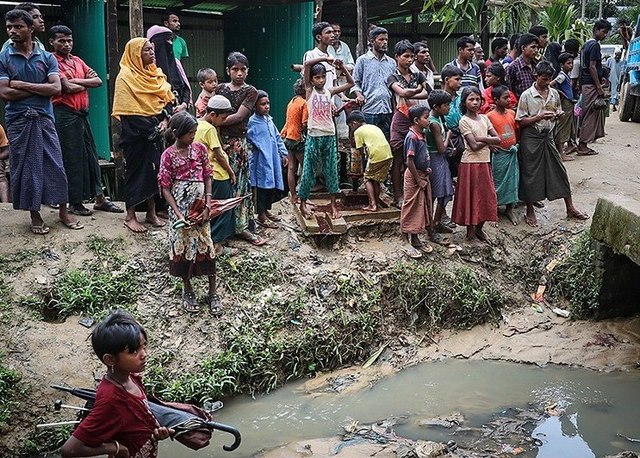
The repatriation process would likely rebuild villages and supply aid for returning Rohingya, but the issue of citizenship and freedom of movement have not been resolved and look unlikely in the near future, that’s if government official signals are correct. The Myanmar government and much of the majority Buddhist population view the Rohingya as Bengali Muslims from Bangladesh and have no rights to Myanmar citizenship since they were stripped of this under the 1982 Citizenship Act. These one million or so stateless peoples can not keep carrying on living in fear and lacking any human rights.
If the international community are advocates of the responsibility to protect, then increased pressure on the Myanmar government and military on the issue of citizenship and protection is required. The only major steps of cohesion on the Myanmar government and military has been a few statements of condemnation from world leaders, and limited unilateral sanctions. A year after the crackdown, the U.S have placed sanctions on a few military generals and police officials .
Myanmar is still in democratic transition, and Aung San Suu Kyi is trying to balance civilian governance, while maintaining relations with the military, who still hold sway over security, society and the economy. A return of tougher sanction will do more harm to Aung San’s efforts to bring democracy and rebuild the economy, but more targeted sanctions against key military generals, and a full break in relations with the military establishment by the west could force the hand of the military gripe over Myanmar
As for accountability for the inproportionate attacks on the Rohingya population, There has been calls for the International Criminal Court (ICC) to investigate the military actions - although Myanmar is a non-party to the Rome statute, the UNSC has the power to refer the case to the ICC. Though it is not as straightforward, this would require agreement by all members including the permanent five (U.S, UK French, Russia & China). China has been reluctant to blame or pressure the Myanmar government or military in the past and would likely block any moves to refer a case to the ICC. Nonetheless this is an avenue that other council members need to keep pushing, as the only real prospect for international action against the Myanmar military.
Furthermore, the Myanmar civilian government has announced a independent commission of inquiry into human rights violations during the August 2017 crackdown. Not much detail has been released, except that the commission will include a mix of domestic and international representatives and experts. On paper, this sounds like owning up to responsibility for the violence, but how independent will it be. Will the military establishment fully cooperate? As most Rohingya refugees will not be returning to Myanmar any time soon, will the commision visit the refugee camps in Bangladesh and talk to refugees about their experiences? Will the commission have the power to prosecute or at least recommend individuals to be put on trial? Theses questions have not been answered yet - and likely this commission will just show that the government is taking action, but nothing concrete happens. The military for instance are unlikely to cooperate or allow their personnel to be prosecuted. And the Rohingya refugees in Bangladesh are likely not want to talk to a commission of enquiry conducted on behalf of the Myanmar government, who have not stood up for their rights, independent or not. To overcome these issues, a more independent commission would be better of been run by the UN, even in cooperation with the Myanmar’s own independent commission.


